
Culture is more than a catalogue of artistic practices or a fixed heritage. It functions as a collective coding system that shapes how a group interprets reality, prioritizes what matters and passes its points of reference from one generation to the next. Three mechanisms structure this system: language, shared values and collective memory. Each operates at a different level, but together they produce what we call collective identity.
Language and cognitive categories: the invisible foundation of culture
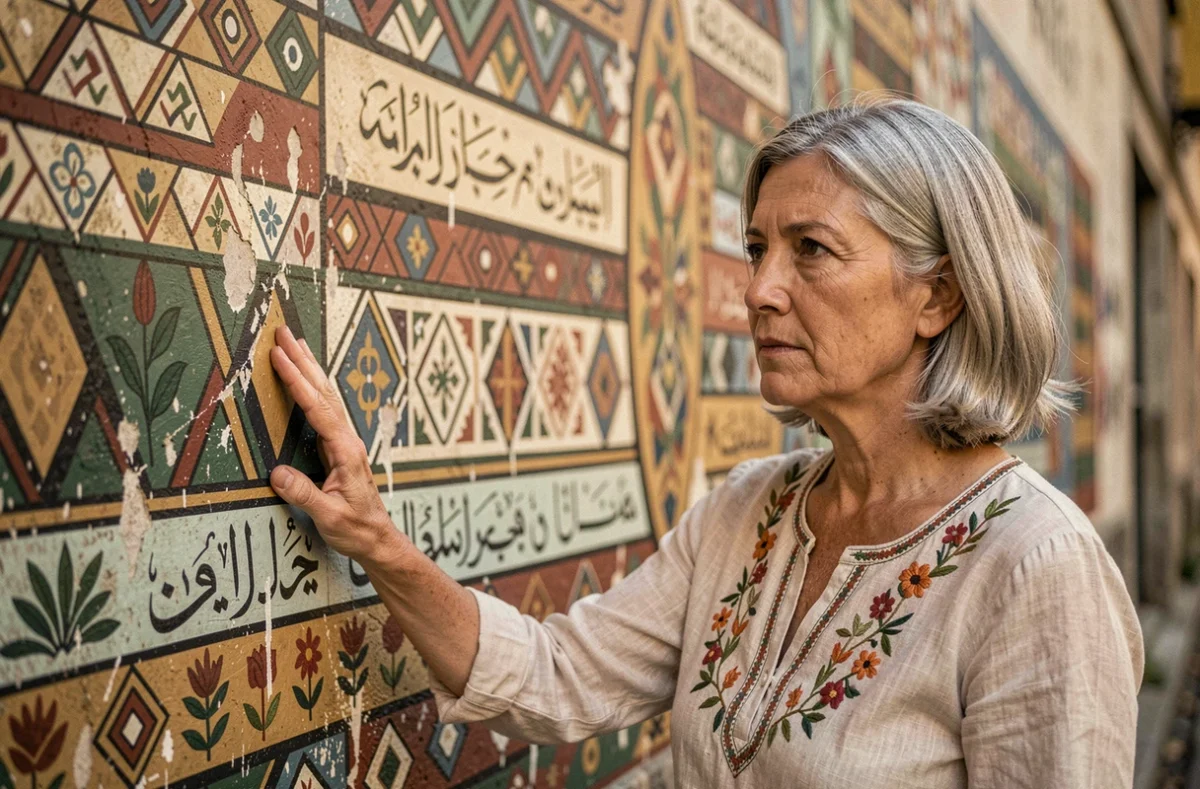
Language does more than enable communication. It divides reality into categories, draws distinctions and erases others. A group with several terms for the same phenomenon does not perceive it in the same way as a group with only one.
In France, the tension between the national language and regional languages illustrates this mechanism in concrete terms. Article 2 of the Constitution establishes French as the language of the Republic, while Article 75-1 recognizes regional languages as part of France’s heritage.
This legal coexistence creates a paradox: recognition as heritage does not automatically lead to protected public use. Regional languages carry cultural categories that standard French does not always capture, and their decline changes how people collectively perceive the region.
Understanding what culture is for a group means analyzing its language not as a neutral tool, but as a filter that shapes thought and social behavior.
This linguistic dimension explains why automatic translation policies, including those driven by artificial intelligence, raise questions about cultural diversity. UNESCO has identified AI as a major challenge for preserving this diversity, precisely because language models tend to standardize categories of thought.
Shared values and social cohesion: what holds a group together
Shared values form the second pillar of collective identity. They are not the same as individual opinions. A shared value acts as an implicit norm that guides behavior without requiring constant justification. Punctuality, family solidarity, attitudes toward authority and the importance placed on individual expression vary from one society to another, and these differences give rise to distinct cultures.
One technical point that popular accounts overlook is the distinction between professed values and practiced values. A group may claim to value equality while reproducing social hierarchies through its cultural practices. Over several decades, surveys by the Ministry of Culture have shown that increased participation in certain cultural activities does not reduce social disparities in participation. Attendance at cultural events remains strongly correlated with social status.
This gap between words and actions does not make values any less fundamental to culture. It shows that culture operates on two levels at once:
- The declarative level, where values are expressed, taught and claimed as markers of belonging to the group
- The practical level, where actual behavior reveals implicit hierarchies that official discourse does not always acknowledge
- The institutional level, where public measures (cultural policies, school curricula, funding) seek to bring these two levels closer together
The Pass Culture as a revealing example
The Pass Culture offers a concrete example of this gap. In its assessment published in December 2024, the Cour des comptes notes that some potential beneficiaries did not join the scheme or did not use it. Funded access to cultural offerings does not automatically create lasting cultural habits. This finding confirms that cultural values are not passed on through exposure alone, but through deeper mechanisms of social integration.
Collective memory and shared narratives: the glue that sustains identity over time
The third element that shapes collective identity is shared memory. A group is defined not only by what it experiences in the present, but also by the story it constructs about its past. This story is never neutral: it selects certain events, downplays others and creates a narrative continuity that gives the group a sense of its own coherence.
Collective memory is not history in the academic sense. It is an ongoing reconstruction of the past in response to the needs of the present. Commemorations, founding myths, and the heroic figures remembered or forgotten all contribute to this construction. In France, recurring debates about the teaching of history show just how much the collective narrative remains a subject of political and social negotiation.
Collective memory also works through exclusion. What a group chooses not to pass on shapes its identity just as much as what it does pass on. Silences around certain periods, historical taboos and competing narratives upheld by subgroups create internal tensions that can fragment or reshape collective identity.
Transmission and generational breaks
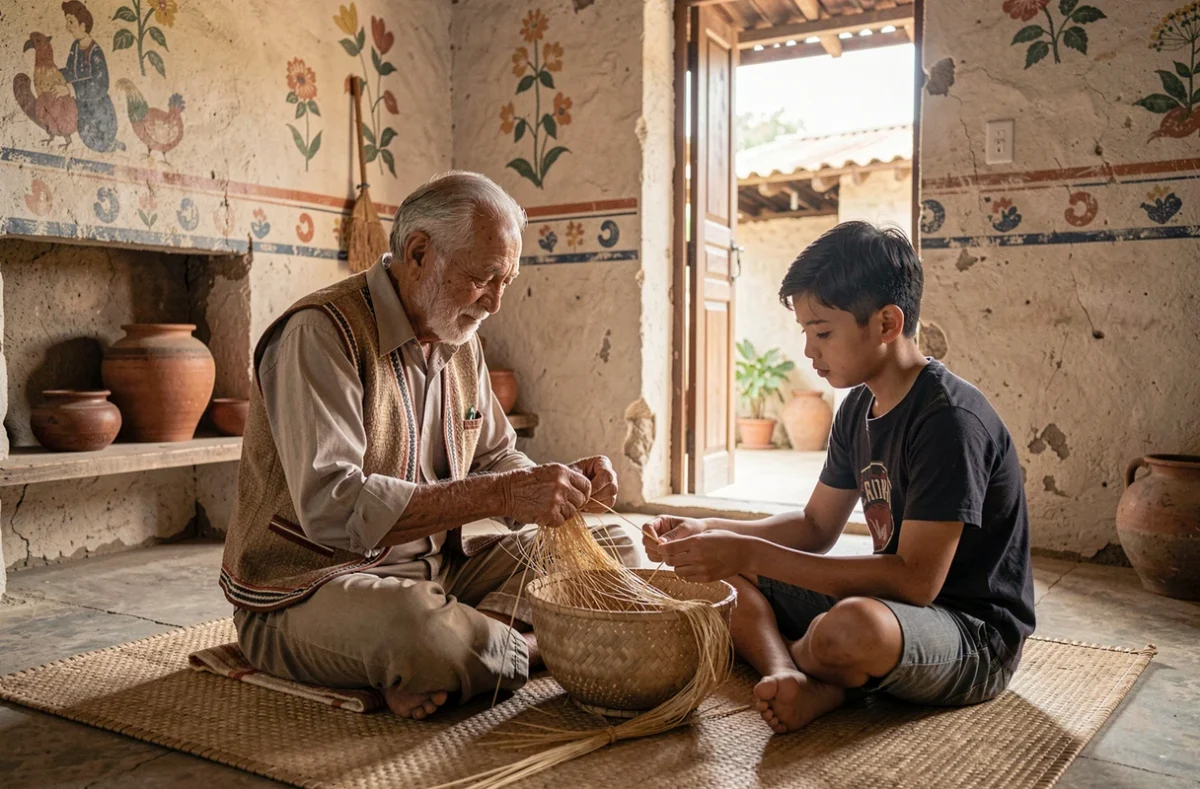
Intergenerational transmission makes the picture more complex. Each generation inherits a narrative, reinterprets it and passes it on in a modified form. This process explains why collective identity is never fixed, but always evolving. Research in the humanities and social sciences highlights that contemporary identities are more plural than in the past, with greater mobility between affiliations.
Digital culture accelerates this process. Collective narratives now circulate on platforms beyond the reach of traditional institutions of transmission (schools, families, religious institutions). This partial deinstitutionalization of collective memory does not eliminate it; it changes the channels through which it is transmitted and the pace at which it evolves.
How language, values and memory interact: a dynamic, not a sum
These three elements do not operate in isolation. Language encodes values and structures memory. Values shape which memories are selected. Memory legitimizes some values and discredits others. Together, they form a cultural system whose coherence is always partial and provisional.
- Language carries implicit value categories (the formal “vous” in French encodes a social hierarchy that other languages do not express in the same way)
- Values determine which historical episodes deserve to be commemorated and which are consigned to oblivion
- Collective memory provides the narratives that justify and normalize the group’s dominant values
Any cultural policy that acts on only one of these levers will have limited results. Funding access to cultural activities without addressing the implicit values that shape participation, or teaching history without examining the linguistic categories that structure it, means treating a symptom without addressing the system.
Collective identity takes shape at the intersection of these three mechanisms, through an ongoing negotiation between what a group says about itself, what it actually does and what it chooses to remember about its past.