
At 23 degrees, the temperature seems easy to manage. Neither cold nor really hot. However, it’s a range where the slightest detail changes everything: a fabric that’s too thick and you sweat, a cut that’s too light and the evening chill catches up with you. Choosing clothes for a woman at this temperature requires thinking beyond the thermometer.
Humidity and wind at 23 degrees: what really affects outfit choice
Have you ever noticed that a day at 23 degrees can feel cool on a spring morning and almost warm on a summer afternoon? The displayed temperature tells only part of the story. Humidity and wind alter the actual thermal sensation.
With dry air and little wind, 23 degrees allows for wearing a simple short-sleeved top without discomfort. Add high humidity, and sweat doesn’t evaporate as well. Cotton, which absorbs water, then clings to the skin instead of cooling it.
Conversely, a steady breeze, even a light one, creates a noticeable chill on the arms and shoulders. Before choosing your outfit, check three data points on your weather app: the temperature, the humidity percentage, and the wind speed. These three elements combined are worth much more than the single degree number.
You will also find tips for dressing at 23 degrees that detail these adjustments based on the actual conditions of the day.
Textile materials suitable for 23 degrees for women
The choice of fabric has more impact than the shape of the garment. At this transitional temperature, some fibers work significantly better than others.
Linen and lightweight cotton: the basics
Linen remains the most suitable fabric for mild days. Its hollow fibers allow air circulation and dry quickly. Linen regulates body temperature better than most fabrics. Its slightly stiff texture makes it comfortable even in slightly humid weather, as it doesn’t cling to the skin.
Cotton works well at 23 degrees if the weight remains light. A fine cotton t-shirt or a cotton poplin blouse is more than sufficient. Opt for unlined versions.
Tencel and alternative fibers
Tencel Lyocell, made from wood pulp, offers a very soft touch and superior breathability compared to classic cotton. Tencel wicks moisture without retaining odors, making it a discreet ally for active days.
These materials are increasingly easy to find in spring-summer collections, in the form of blouses, dresses, or flowy pants.
Women’s outfit at 23 degrees: combinations that work
Rather than listing isolated pieces, here are concrete combinations tested for this precise temperature.
During the day with sunshine
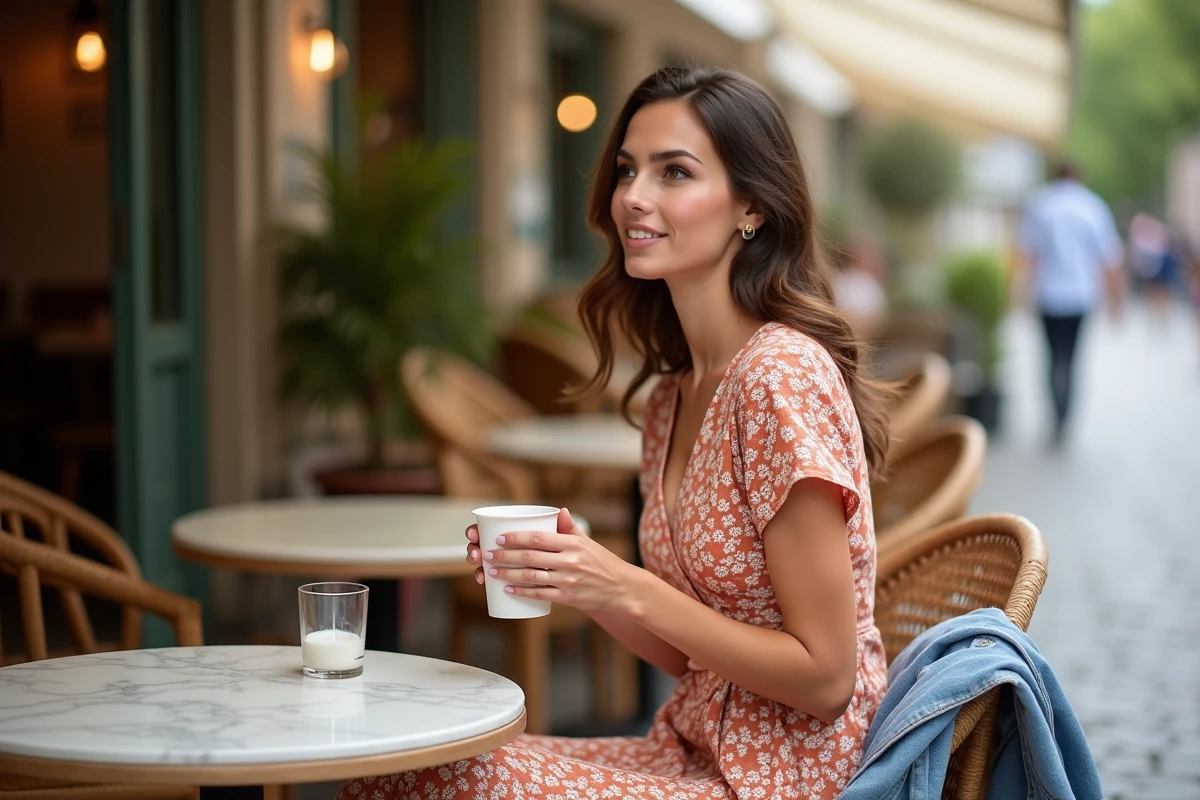
A mid-length dress in linen or Tencel, paired with flat sandals, covers most situations. The loose fit allows for air circulation. Light colors reflect heat instead of absorbing it.
A wide lightweight cotton pant with a simple t-shirt also works very well. The idea: avoid anything that constricts at the waist and thighs.
In the evening or in overcast weather
This is where 23 degrees can become tricky. The temperature drops quickly after sunset, and a light breeze is enough to create discomfort. Having an additional light layer makes all the difference.
- An unlined denim jacket, loose enough not to be too warm indoors but covering enough for an evening terrace.
- A fine knit cardigan in cotton or blended linen, easy to slip into a bag and quick to put on.
- A lightweight cotton scarf, which protects the neck from the wind without adding excessive warmth.
A removable light layer is the most useful piece at 23 degrees. It transforms an afternoon outfit into an evening outfit without changing the whole ensemble.
Common mistakes to avoid when it’s 23 degrees
Some clothing reflexes seem logical but work poorly at this intermediate temperature.
Classic skinny jeans, for example, remain a common choice. The problem: their thick, fitted fabric traps heat around the legs. As a result, you feel hot in full sun, and the material takes time to dry if you sweat.
Cheap synthetic materials (non-technical polyester) pose another issue. They retain odors and create a “plastic bag” effect as soon as the ambient humidity increases. Always prefer a natural fiber or a technical fiber designed for breathability.
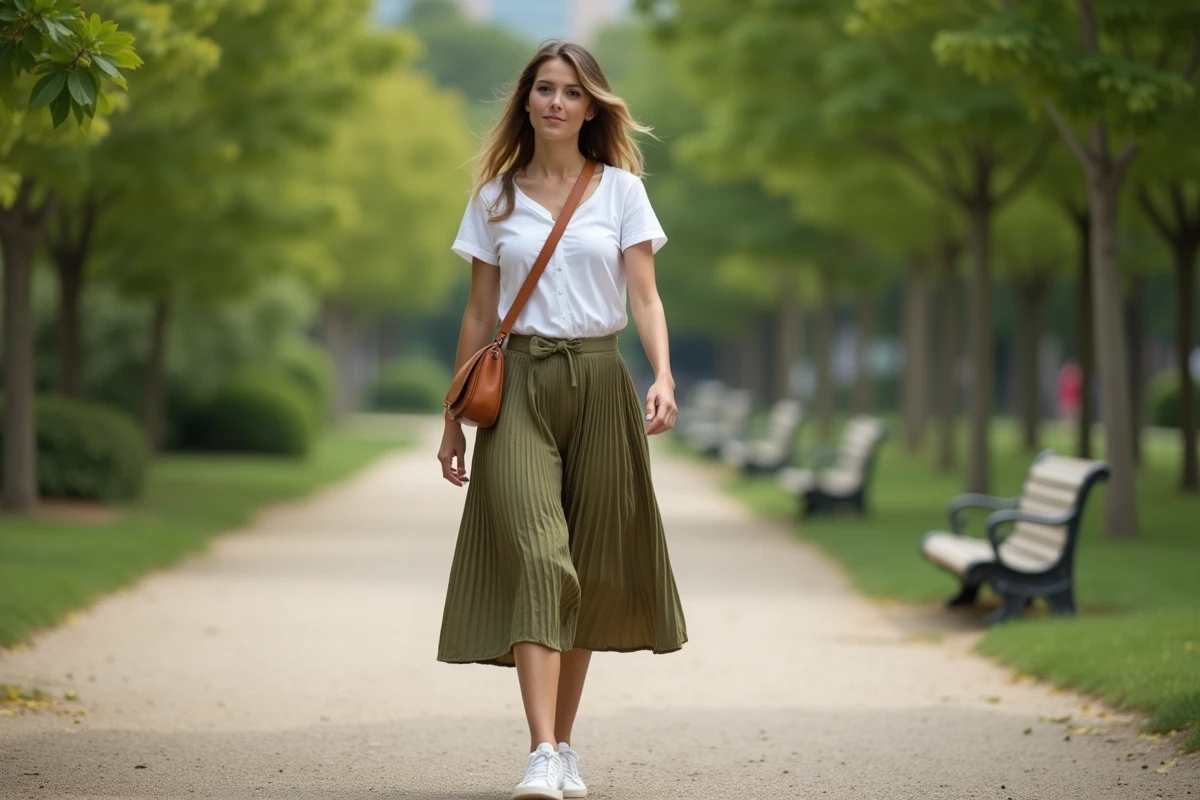
The all-black look attracts and retains heat from the sun. At 23 degrees in full sun, a black top can raise the perceived thermal sensation by several degrees. Light neutral tones (beige, off-white, sky blue) offer much better comfort.
- Avoid thick layering: a structured blazer over a thin sweater will be too warm by noon.
- Don’t neglect your feet: closed shoes without ventilation, like ankle boots, cause unnecessary sweating.
- Forgetting a covering accessory for the evening remains the most common mistake at this temperature.
23 degrees requires clothing designed for modularity, not for a single weather condition. Choosing pieces that you can combine or remove depending on the time of day will prevent you from suffering from the gaps between the cool morning and the sunny afternoon. The key lies less in the quantity of clothing than in their ability to adapt with you.