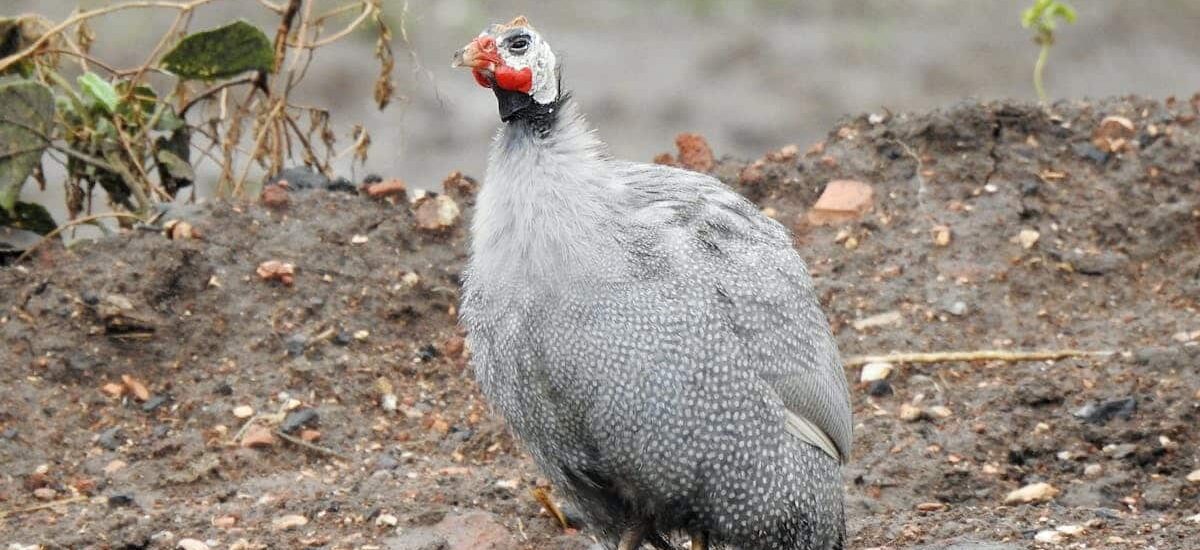
In the fascinating world of poultry, the guineafowl, a species native to Africa, catches the eye with its exotic plumage and intriguing habits. However, it is the male that particularly stands out, with unique and fascinating physical characteristics. From its distinctive plumage to its ostentatious behavior, the male guineafowl displays a multitude of traits that make it remarkable among its peers. Whether you are an experienced breeder, an aspiring ornithologist, or simply a nature enthusiast, here is an in-depth dive into the world of this captivating creature.
The Origins of the Male Guineafowl: A Fascinating Story
The origins of the male guineafowl trace back to Africa, where this species has evolved over the centuries in diverse environments. Its distinctive plumage is a true masterpiece of nature. Its dark gray color is punctuated by irregular white patterns, creating an impression of elegance and refinement.
But how to identify the male guineafowl? It’s quite simple: just observe its plumage and physical characteristics. The male often displays brighter plumage than the female, with more pronounced colors and a well-developed crest on its head.
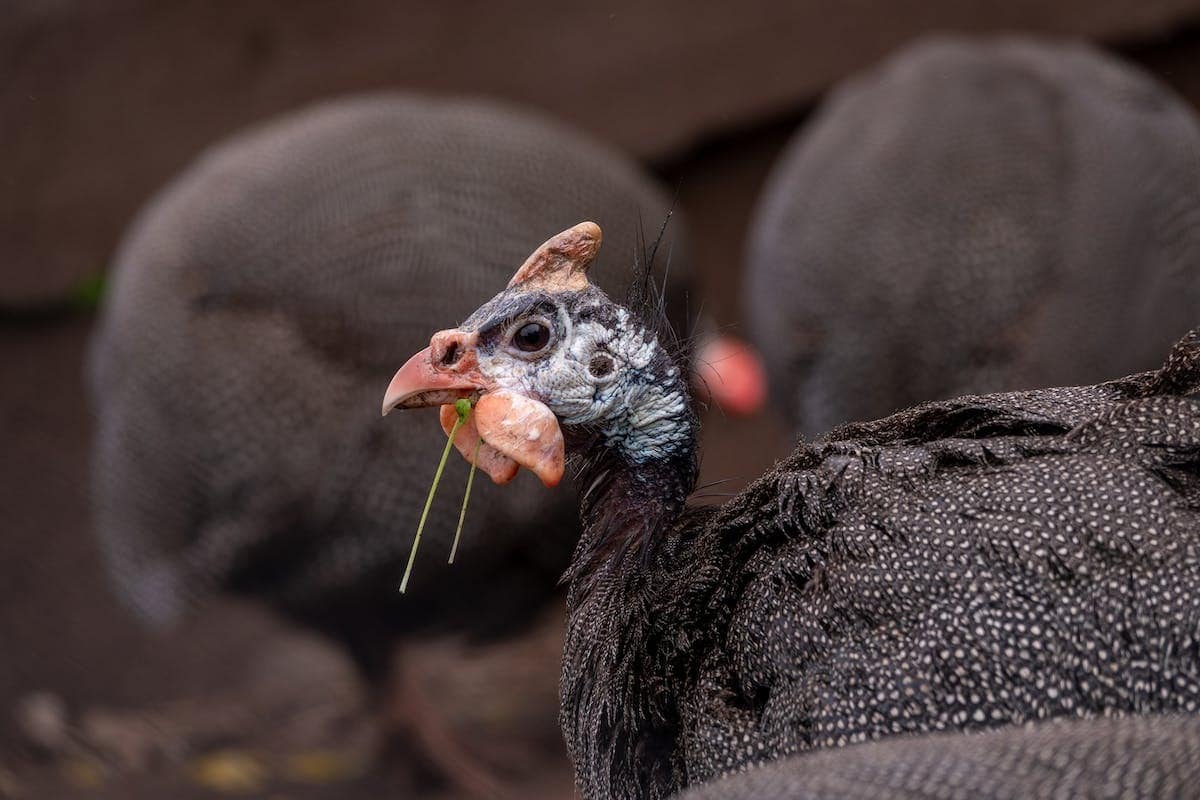
The Plumage of the Male Guineafowl: A Palette of Vibrant Colors
The features of its plumage do not stop there. Indeed, the male guineafowl also sports a beautiful fan-shaped tail, formed by elongated and tapered feathers. This tail is a true asset in its seduction of females.
The male’s plumage is also distinguished by its colorful wings of a pearly white with iridescent reflections. These wings are used during courtship displays where the male showcases all its grace by spreading them wide to impress the females present in its territory.
Another interesting feature of the male guineafowl’s plumage lies in its blue legs. Yes, you read that right! Unlike other birds whose legs are generally more subdued, the male guineafowl sports a very bright bluish color. This gives it a unique appearance and helps attract the attention of potential mates.
By carefully observing these various plumage characteristics in the male guineafowl, one can notice that every detail seems to have been meticulously crafted by Mother Nature to ensure this bird has an appearance that is both elegant and impressive.
It should be noted that all these characteristics can vary slightly from individual to individual. Indeed, as with many animals, there is a certain genetic diversity that is reflected in the plumage. Some individuals may exhibit variations in colors or patterns, adding a touch of uniqueness to each male.
The plumage of the male guineafowl is a true visual spectacle. Its bright and contrasting colors, pronounced crest, impressive fan-shaped tail, and blue legs make it a majestic bird. Such beauty can only captivate the attention of observers and testify to the unsuspected artistic talent of nature.
Size and Weight: The Marked Differences Between Male and Female Guineafowls
The size and weight differences between the male and female are intriguing elements to explore. The male is distinguished by its more imposing stature, its undeniable presence giving it a dominant aura within the group. Indeed, it is generally larger than the female, often reaching a remarkable height.
From a morphological perspective, the male also exhibits a pronounced sexual dimorphism in terms of weight. It tends to be bulkier than its female counterpart, with a developed musculature that indicates superior physical strength. This characteristic can be explained by the needs related to its protective role within the family group.
The size difference between the two sexes can be observed from a young age, although it is less pronounced in chicks. As they grow, this disparity gradually accentuates until adulthood, where it becomes evident even to the untrained eye.
Beyond the distinctive visual aspects, variations in physical constitution also have an impact on social behavior among guineafowls. The male often uses its imposing stature to assert its authority during interactions with its peers or during mating periods.
Specific Behaviors: When the Male Guineafowl Stands Out
The specific behaviors of the male guineafowl add a fascinating dimension to its social universe. The male is known for its natural tendency to establish and defend its territory. It marks its space by emitting powerful vocalizations that resonate in the surroundings, thus warning other community members that they have entered its private zone.
When it feels threatened or when intruders attempt to enter its territory, the male guineafowl displays aggressive behavior. It stands tall and spreads its wings to appear larger and more intimidating. In extreme cases, it may even go so far as to physically attack the intruder to protect its family and possessions.
Even more interesting, during the mating season, the male performs a complex dance to court the females with which it wishes to mate. This dance is an impressive visual spectacle where it demonstrates great physical coordination while producing distinctive sounds with its feathers.
The male also plays an active role in reproduction by helping to build the nest to accommodate the female’s eggs. Its physical strength allows it to help move heavy items such as branches or leaves to create a safe and comfortable environment for incubation.
Although traditionally considered solitary compared to the female, the male guineafowl can nevertheless form alliances with other males to collectively defend their territory against external threats. These temporary alliances demonstrate the social intelligence and adaptability of the male to changing situations.
The specific behaviors of the male guineafowl reveal a complex and fascinating being that deploys its physical and behavioral assets to stand out within its community. Its imposing stature, protective aggression, seductive dance, and active role in reproduction make it a central figure in the guineafowl ecosystem.
The Crucial Role of the Male Guineafowl in Species Reproduction
The importance of the male guineafowl in the reproduction of the species cannot be underestimated. Indeed, its role is crucial to ensure reproductive success and perpetuate the species.
The male plays an essential role in the fertilization process. It is equipped with a specialized reproductive organ called a penis that allows it to introduce its sperm into the female’s reproductive system during mating. This direct interaction between the two individuals ensures an effective fertilization of the eggs and thus increases the chances of survival for future generations.
The male actively participates in all stages of the reproductive cycle. After mating, it stays with the female to watch over her and protect their offspring. Its paternal instinct manifests through its constant vigilance against potential predators and its assistance in foraging for food for the entire family.
Beyond the physical and behavioral aspects, the male also contributes to maintaining genetic diversity within the species. Its active participation in different matings with various females allows for a varied combination of genes, thus promoting better adaptation to environmental changes.
The efforts made by the male to ensure reproductive success are therefore essential to guarantee not only the sustainability but also the continuous evolution of the species. Without its active presence, populations would be less resilient to the challenges they may face.
The male guineafowl plays a fundamental role in the reproduction of the species. Its specific physical and behavioral characteristics, combined with its active investment in all stages of the reproductive cycle, make it a key element in ensuring the survival and evolutionary success of guineafowls.